Hamza
April 17, 2026
0 Comment

If you run an online store, you’ve probably heard that SEO is more than just keywords and backlinks. One of the most underused, yet highly effective, techniques is schema markup. And yet, most e-commerce businesses either skip it entirely or implement it incorrectly.
This guide breaks down the seven most important schema types for e-commerce website development in dubai, why each one matters, and how to use them to drive more clicks, build trust, and increase sales.
If your search results are just plain blue links, users are scrolling right past you to the “Rich Result” competitors. Turn on your search visibility with Alrwyt Alwash and start commanding the attention your brand deserves.
In today’s crowded digital marketplace, simply having an online store isn’t enough. Search engines need structured, well-organized data to truly understand what’s on your website. That’s where schema markup comes in.
Schema for eCommerce is a type of code you add to your site that tells search engines exactly what your content means, not just what it says. When done correctly, it doesn’t just improve your rankings. It changes how your listings appear in search results, making them richer, more informative, and far more clickable.
At Alrwyt Alwash, we’ve worked with numerous businesses to improve their search performance through structured data. Whether you’re investing in e-commerce SEO in Dubai or building a strategy from scratch, understanding schema is a critical first step.
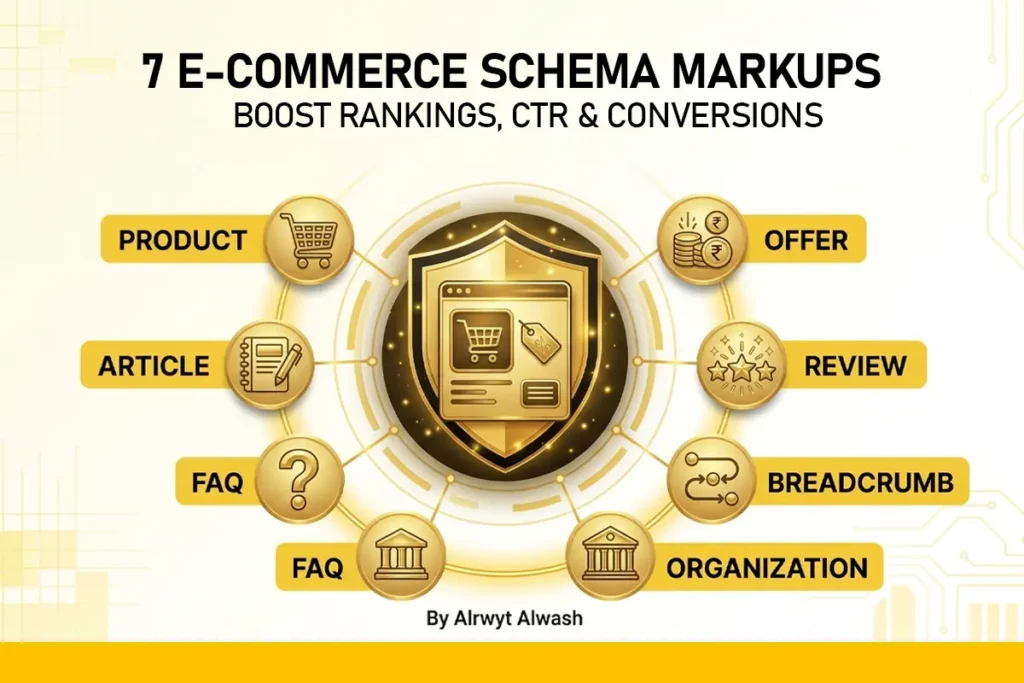
Product schema gives search engines the full picture of what you’re selling, the name, price, availability, images, and more. This data powers rich snippets in search results, making your listings visually stand out from plain text competitors.
Think of it as the foundation of your entire schema strategy. Without it, search engines are guessing what your page is about.
Key elements to include:
When properly implemented, your products can appear with enhanced details directly in Google search results, a major advantage for any e-commerce SEO strategy.
Offer schema works hand-in-hand with product schema. It surfaces your pricing, discounts, and stock availability directly in the search results, before a user even visits your page.
This transparency attracts high-intent buyers who are already ready to purchase. Less browsing, more buying.
What it displays in search results:
For businesses competing in markets like Dubai, this schema gives you a measurable edge over stores that don’t use it.
When users see a star rating appear alongside your listing in Google, they’re significantly more likely to click. Review schema makes that happen by feeding your customer ratings directly into search results.
But there’s a right way and a wrong way to do this.
Best practices:
Violating Google’s review guidelines can get your structured data penalized or ignored entirely. When done properly, a review schema is one of the fastest ways to improve CTR and build instant credibility.
Breadcrumbs aren’t just a navigation tool for users; they’re a powerful signal for search engines. Breadcrumb schema tells Google how your site is structured, which helps it crawl and index your pages more effectively.
In search results, breadcrumbs replace the long, messy URL with a clean, readable path. That alone can improve click-through rates.
Key advantages:
The organization schema tells search engines who you are as a business. It includes your name, logo, contact information, and social media profiles, and it helps Google associate all of those signals with a single, credible entity.
What to include:
This is especially important for businesses targeting the visibility acquired through local seo services dubai.
The FAQ schema allows your content to appear as expandable question-and-answer sections directly in Google search results. This means your listing takes up significantly more space on the page, without any extra paid budget.
Why it works:
Use this for product pages, category pages, and blog content that targets common customer questions.
If your store includes a blog, and it should, article schema helps Google understand and categorize that content correctly. It improves your chances of appearing in featured snippets and news-style results.
Where it applies:
This aligns directly with content-driven ecommerce strategies, helping your store rank for informational queries that bring in top-of-funnel traffic.
You don’t need to be a developer to get started with schema. There are several practical approaches depending on your platform and technical comfort level.
Your main options:
Manual coding (JSON-LD): The most flexible method. JSON-LD is Google’s preferred format and can be added directly to your page’s <head> section. It’s clean, doesn’t interfere with your HTML, and is easy to update.
CMS plugins: Platforms like WordPress and WooCommerce have plugins (such as Yoast SEO or Rank Math) that handle schema generation automatically with minimal setup.
SEO tools and generators: Tools like Google’s Structured Data Markup Helper and Schema.org’s own documentation make it easy to generate valid markup without writing code from scratch. You can also use JSON-LD generators for quick implementation.
Most major eCommerce platforms offer some level of built-in or plugin-based schema support:
Even with platform support, it’s worth auditing what’s actually being generated. The default schema is often incomplete.
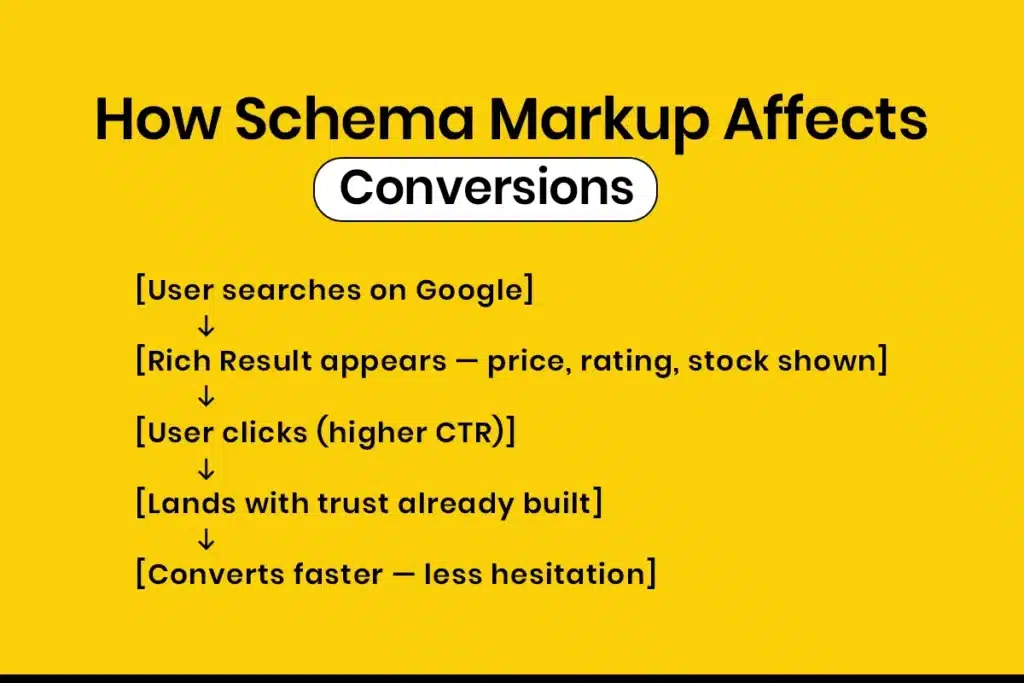
Schema markup is not a direct Google ranking factor, but it drives conversions in ways that indirectly improve your SEO performance.
Here’s the logic: when a user sees your listing with star ratings, a price, and stock availability displayed right in the search results, they already have the key information they need before clicking. That reduces hesitation and increases purchase intent.
What shows up, and what it does:
Higher CTR tells Google your page is relevant. More relevant pages tend to rank better. Schema helps start that virtuous cycle.
For small stores with simple product catalogs, a plugin might be enough. But for larger ecommerce operations, or businesses in competitive markets, professional implementation is worth the investment.
Mistakes in schema code can cause search engines to ignore your structured data entirely. Incorrect or misleading data (like fake reviews or wrong pricing) can result in Google penalties. An incomplete schema means you’re leaving rich result opportunities on the table.
At Alrwyt Alwash, we specialize in structured data optimization as part of broader ecommerce SEO services. Whether you need a full SEO strategy or just a schema audit, our team focuses on measurable outcomes.
Our services include:
Schema markup has moved from a nice-to-have to a must-have for any serious e-commerce store. The seven schema types covered in this guide, Product, Offer, Review, Breadcrumb, Organization, FAQ, and Article, each serve a specific role in improving how your store appears and performs in search results.
When implemented correctly, schema doesn’t just improve your visibility. It builds trust, improves click-through rates, and ultimately drives more sales. Whether you manage SEO in-house or work with a specialist team, investing in structured data is one of the highest-ROI moves you can make for your online store.
If you’re looking to scale in competitive markets like Dubai, mastering schema for e-commerce is your next step.
High traffic is useless if it doesn’t convert. Don’t let broken code or missing price tags kill your sales. Partner with Alrwyt Alwash to implement an elite schema framework that builds instant trust and drives ready-to-buy customers straight to your checkout.
Schema markup is structured code added to your website that helps search engines understand your content more clearly. In eCommerce, it organizes product details like price, availability, and customer ratings, allowing your listings to appear as rich and more clickable search results.
You can add schema using apps like JSON-LD for SEO or SEO Ant, which generate structured data automatically. You can also manually edit your product. liquid file for custom setup. Always test your schema using Google’s Rich Results Test after implementation.
Product and Offer schema are essential. You should also add Review and AggregateRating for star ratings, and Breadcrumb schema to show your site structure. Together, they create a complete and optimized search listing.
No, schema is not a direct ranking factor. However, it improves click-through rates by making your listings more attractive. Higher CTR signals relevance to Google, which can help improve rankings over time.
You can use Google’s Rich Results Test to check eligibility for rich results. The Schema Markup Validator helps identify errors. You can also track performance in Google Search Console under the Enhancements section.
Yes, but only when used correctly. Reviews must be real and visible on your page. Avoid fake or self-generated reviews, as this can lead to penalties or ignored structured data.
Yes. The schema shows key details like price, ratings, and availability directly in search results. This attracts more qualified users who are ready to buy, leading to higher conversions.
Not necessarily. Many platforms offer plugins or apps that handle schema automatically. Basic knowledge of JSON-LD helps with customization, but advanced coding is only needed for complex setups.
Search engines may ignore your schema completely. Errors can prevent rich results from appearing, and misleading data can result in penalties. Always test your implementation carefully.
For larger stores or competitive markets, hiring an expert is a good idea. They ensure accurate implementation, fix errors, and help you get the most value from structured data.


