Hamza
April 5, 2026
0 Comment

You built a professional website and listed your services—but when patients search “clinic near me” or “doctor in Dubai,” your clinic doesn’t appear.
The problem isn’t your care—it’s how your website communicates with Google. Small SEO mistakes, such as missing service pages, slow load times, or weak local optimization, can quietly drive patients away.
This situation is more common than many healthcare providers realize. Clinics often assume that having a website automatically means patients will discover them online. In reality, search engines require specific signals before they can confidently recommend a clinic to potential patients.
The problem usually isn’t the quality of your services—it’s the way your website communicates with search engines. Small technical issues, incomplete service pages, weak local optimization, or poor website performance can quietly prevent your clinic from ranking where patients can actually see it.
That’s why understanding healthcare SEO mistakes is so important. When you know what might be holding your website back, you can take the right steps to fix it and improve your online visibility.
In this guide, we’ll explore the most common reasons clinics struggle to rank on Google and explain practical ways to correct them. Many healthcare providers work with a specialized Healthcare SEO Agency in Dubai to handle these improvements and strengthen their online presence through professional Healthcare SEO Services.
Key Takeaways
Healthcare websites operate in a more sensitive digital environment than many other industries. When someone searches for medical advice or healthcare providers, the information they receive can directly affect their health decisions.
Because of this, search engines hold medical websites to higher standards.
Google evaluates healthcare websites carefully to ensure that users receive reliable information. A clinic website must clearly demonstrate credibility and professionalism.
Important elements that strengthen trust include:
When these elements are missing or unclear, search engines may consider the website less trustworthy.
The healthcare industry has become increasingly competitive online. Clinics, hospitals, and medical centers are investing heavily in digital marketing to attract patients searching on Google.
As a result, clinics that do not actively optimize their websites often struggle to compete with organizations that use structured SEO strategies.
This is why many healthcare providers partner with a Healthcare SEO Agency in Dubai that understands the local market, patient behavior, and search engine requirements.
Many clinic websites have hidden SEO issues that prevent them from appearing in Google search results. A professional analysis can reveal the exact problems affecting your rankings.
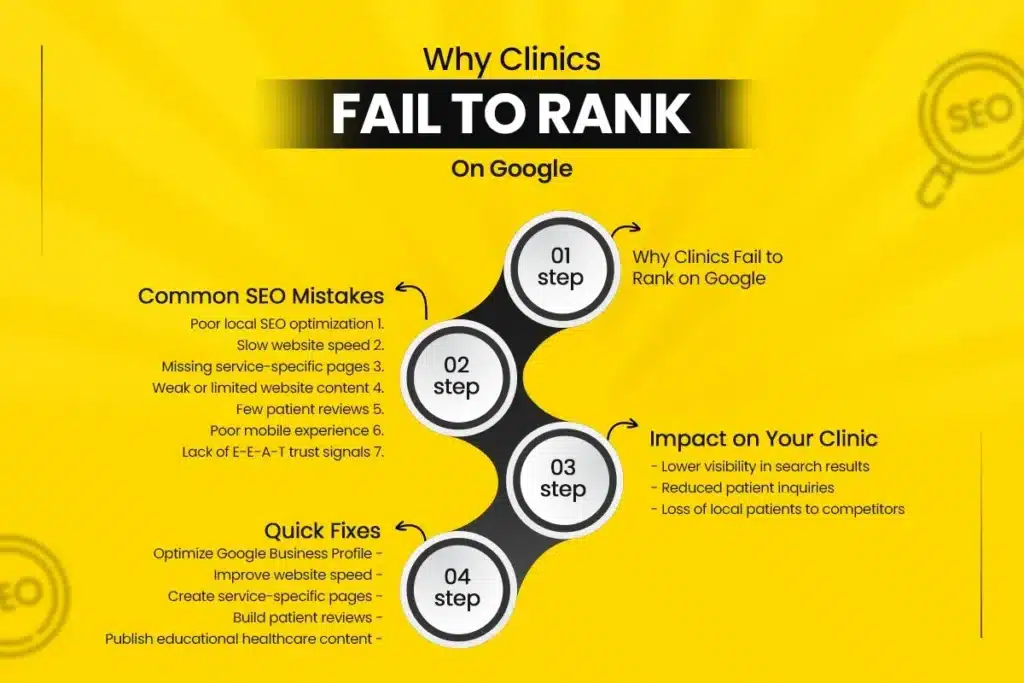
Several technical and strategic mistakes can limit a clinic’s visibility in search results. Some of these issues are easy to overlook but can significantly impact how search engines interpret your website.
Understanding these mistakes helps healthcare providers make better decisions about improving their digital presence.
Below are some of the most common SEO issues that prevent clinic websites from ranking effectively.
Many clinic owners ask the same question:
“Why isn’t my clinic appearing in ‘near me’ searches?”
In most cases, the answer lies in local SEO optimization.
When someone searches for healthcare services, Google uses the user’s location to display nearby clinics. These results usually appear in the Google Maps section at the top of the search page.
For example, a patient searching for:
will typically see three local businesses highlighted on the map.
If your clinic is not optimized for local search signals, it may not appear in these results even if it is physically close to the user.
To improve visibility in local searches, clinics must optimize several key elements:
Experienced Healthcare SEO Services in Dubai focus heavily on local optimization because it directly influences how easily nearby patients can find your clinic online.
Website speed plays an important role in both user experience and search engine rankings.
Patients searching for healthcare services usually want quick answers. If a clinic website takes too long to load, visitors may leave before exploring the services offered.
Google prioritizes websites that load quickly because they provide a better experience for users. A slow website can lead to:
These signals tell search engines that users are not satisfied with the website, which can negatively affect rankings.
Several technical factors can reduce website performance, including:
Improving these technical elements helps create a faster, smoother browsing experience for patients.
Many clinics list all treatments on a single page. While this may seem convenient, it limits the website’s ability to rank for specific search queries.
Patients search for very specific healthcare services. For example:
If your website only has one general “services” page, Google may struggle to understand the full range of treatments your clinic offers.
Creating individual pages for each service makes it easier for search engines to match your website with relevant searches.
Dedicated service pages allow clinics to:
These pages also improve the patient experience by giving visitors clear information about the procedures they are interested in.
Agencies like Alrwyt Alwash often recommend structured service pages as part of a comprehensive healthcare SEO strategy.
Another common reason clinic websites fail to rank is limited or shallow content.
Many healthcare websites focus only on listing services and contact information, but patients often search for answers to health-related questions before booking an appointment.
Search engines prioritize websites that provide helpful information to users. When clinics publish educational content, they increase their chances of appearing in search results.
Examples of useful healthcare content include:
Well-written content demonstrates expertise and builds credibility for a clinic. Over time, consistent educational content can position a clinic as a trusted source of information.
Professional providers of Healthcare SEO often create patient-focused content strategies that improve both search visibility and patient engagement.
Online reviews play a major role in both patient decision-making and search engine rankings. When potential patients search for healthcare providers, they often compare clinics based on ratings, reviews, and overall reputation.
If your clinic has very few reviews—or negative reviews without responses—it can affect both visibility and trust.
Search engines consider reviews an important local ranking signal. A clinic with consistent positive reviews appears more credible and relevant to users searching for healthcare services.
Reviews also influence patient behavior. When someone is choosing between two clinics, the one with stronger ratings and detailed feedback is often selected first.
Positive reviews help clinics:
A strategic review management process often helps clinics consistently build their online reputation.
Many satisfied patients simply forget to leave reviews unless they are reminded. Clinics can increase review volume by creating simple processes that encourage feedback.
Common strategies include:
Responding to reviews—both positive and negative—also shows professionalism and care for patient experiences.
Most patients now search for doctors and clinics using mobile devices. If your website does not perform well on smartphones or tablets, it may struggle to rank in search results.
Google uses mobile-first indexing, meaning it primarily evaluates the mobile version of your website when determining rankings.
A poorly optimized mobile website can create a frustrating user experience. Patients may struggle to read content, navigate pages, or book appointments.
Common mobile usability issues include:
When users leave quickly because of these issues, search engines interpret it as a negative signal.
A mobile-friendly healthcare website should prioritize simplicity and accessibility.
Important improvements include:
A specialized Healthcare SEO Agency often performs mobile usability testing to ensure that patients can easily access healthcare information from any device.
Healthcare websites fall under a special category in Google’s search guidelines known as YMYL (Your Money or Your Life) pages. These are pages that can affect a person’s health, finances, or safety.
Because medical information directly influences health decisions, search engines evaluate healthcare content very carefully.
Google expects healthcare websites to provide highly reliable and accurate information. Content that lacks credibility or expertise may struggle to rank well.
Examples of YMYL healthcare content include:
If search engines cannot verify the credibility of the content, they may prioritize other websites that demonstrate stronger authority.
E-E-A-T stands for Experience, Expertise, Authoritativeness, and Trustworthiness. These factors help search engines evaluate whether a healthcare website provides reliable information.
Clinics can strengthen E-E-A-T by:
Healthcare websites that demonstrate strong expertise and transparency are more likely to rank well in competitive medical search results.
SEO improvements do not produce instant results. Search engines need time to crawl updated pages, evaluate changes, and adjust rankings.
However, fixing common healthcare SEO issues can gradually improve visibility and patient traffic.
During the first few months, clinics may notice early improvements such as:
These improvements help search engines understand the website more effectively.
As optimization efforts continue, websites may begin ranking for additional keywords and attracting more visitors.
Clinics often start seeing:
Consistent SEO work eventually builds stronger authority and stable rankings.
Over time, clinics can achieve:
Many clinics work with a professional Healthcare SEO Agency to maintain long-term optimization and ensure steady growth.
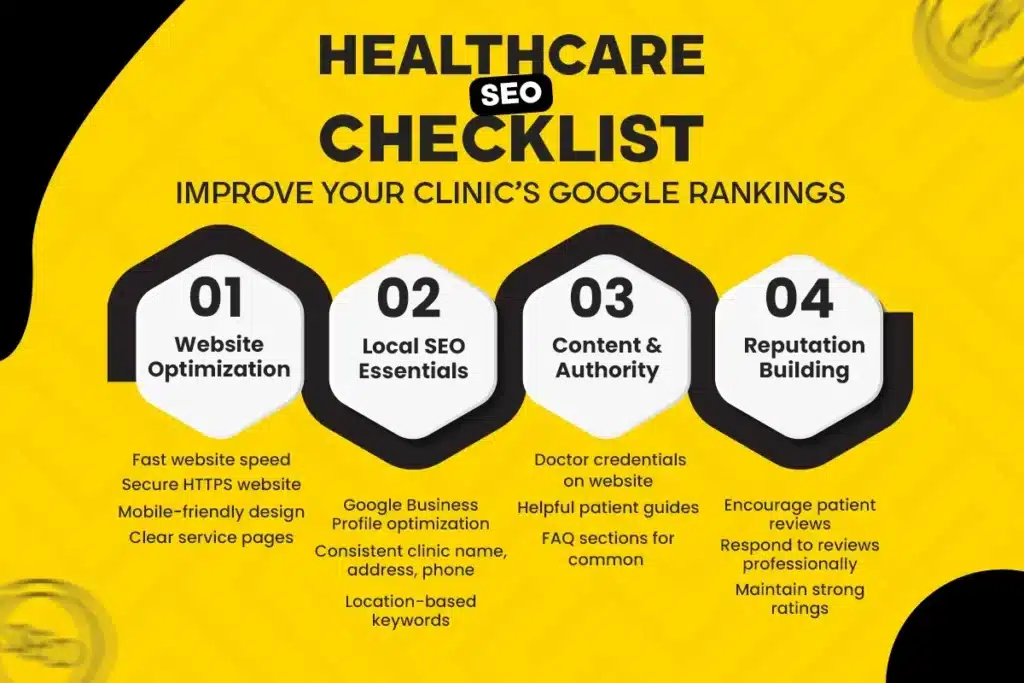
If your clinic website is struggling to rank, reviewing the following checklist can help identify potential problems.
Following these steps can significantly improve a clinic’s ability to appear in relevant healthcare searches.
Partner with experts who understand healthcare SEO and local search optimization. Our team helps clinics improve rankings, attract nearby patients, and build long-term digital growth.
Many healthcare providers assume their clinic should automatically appear in search results once they launch a website. In reality, strong online visibility requires careful optimization, consistent updates, and attention to patient experience.
Common issues such as slow website performance, missing service pages, weak content, and poor review management can quietly prevent clinics from ranking where patients can find them.
By identifying and fixing these healthcare SEO mistakes, clinics can significantly improve their online presence and attract more local patients searching for medical services.
Partnering with an experienced provider of Healthcare SEO Services can help healthcare practices identify hidden issues, strengthen website performance, and implement strategies that deliver long-term growth.
Organizations such as Alrwyt Alwash focus on helping clinics build sustainable digital visibility, allowing healthcare providers to focus on what matters most—delivering quality care to their patients.
Clinics may not appear in local searches if their Google Business Profile is incomplete, their website lacks local SEO signals, or their business information is inconsistent across directories.
One of the most common mistakes is failing to create detailed service pages. Without clear pages for each treatment or specialty, search engines struggle to understand the services your clinic offers.
Slow websites create poor user experiences, leading visitors to leave quickly. Search engines interpret this behavior as a negative signal, which can reduce rankings.
Yes. Dedicated pages for each service help search engines match your website with specific search queries and provide patients with more detailed information.
Positive reviews improve both trust and visibility. Search engines consider review quantity, quality, and frequency when ranking local businesses.
A mobile-friendly website should load quickly, display properly on small screens, and allow users to easily navigate content and book appointments.
YMYL pages include content that affects a person's health or safety. Because medical information falls into this category, Google evaluates healthcare websites more carefully for accuracy and credibility.
Most clinics see early improvements within 1–3 months, stronger growth in 3–6 months, and stable long-term results after 6 months or more, depending on competition and website condition.


